


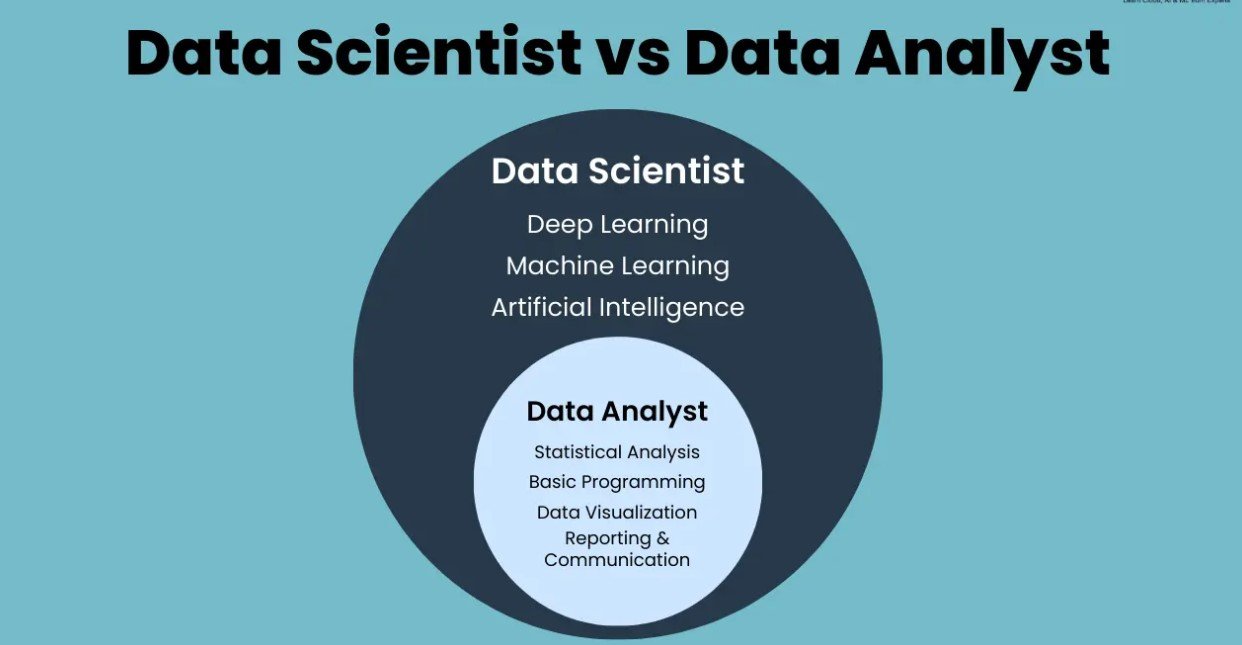
The demand for data professionals continues to grow across industries, but many learners still struggle to choose between two popular roles: Data Analyst and Data Scientist. While the titles sound similar, the day-to-day responsibilities, skill requirements, and career trajectories differ in important ways. In 2026, with businesses becoming more data-driven than ever, choosing the right learning path depends on your background, interests, and long-term goals. This guide offers a clear comparison to help you make an informed decision.
Understanding the Role of a Data Analyst
A Data Analyst focuses on interpreting existing data to answer business questions. The role is highly practical and closely aligned with business operations. Analysts work with structured datasets, identify trends, create dashboards, and present insights to stakeholders who may not have a technical background.
Common responsibilities include data cleaning, querying databases using SQL, building reports, and visualising results through tools such as Power BI or Tableau. Strong analytical thinking and communication skills are essential, as the insights must translate into actionable decisions. Many professionals entering the field choose a data analysis course in Pune or similar city-based programmes to gain hands-on exposure to tools and real-world datasets that mirror workplace scenarios.
Understanding the Role of a Data Scientist
A Data Scientist works at a more advanced level of data handling and modelling. Beyond analysing historical data, they design predictive models and develop algorithms that help organisations forecast outcomes or automate decisions. This role involves a deeper understanding of statistics, machine learning, and programming.
Data Scientists often work with unstructured or semi-structured data, such as text, images, or sensor data. They use languages like Python or R, apply machine learning libraries, and collaborate closely with engineering teams to deploy models into production systems. While the role can be highly rewarding, it usually requires stronger mathematical foundations and a longer learning curve compared to analytics-focused roles.
Key Skill Differences Between Data Analysts and Data Scientists
The distinction between these two paths becomes clearer when comparing core skill sets. Data Analysts typically focus on SQL, Excel, data visualisation tools, and basic statistics. Their strength lies in understanding business metrics and turning raw data into clear insights.
Data Scientists, on the other hand, require advanced skills in probability, linear algebra, machine learning algorithms, and data modelling. They also need experience with cloud platforms and model deployment practices. For learners who prefer structured problem-solving and business interpretation, a data analyst course often provides a faster and more practical entry into the data domain.
Career Goals and Industry Demand in 2026
In 2026, organisations are hiring both Data Analysts and Data Scientists, but for different purposes. Data Analysts are in demand across finance, retail, manufacturing, healthcare, and IT services, where regular reporting and decision support are critical. These roles are often more numerous and accessible for fresh graduates and career switchers.
Data Scientist roles are fewer but more specialised. Companies typically look for candidates who can handle complex modelling tasks and contribute to long-term data strategy. These positions may offer higher compensation, but they also come with higher expectations in terms of technical depth and experience. Learners pursuing a data analysis course in Pune often find quicker placement opportunities due to the immediate applicability of analytics skills across local and global organisations.
Choosing the Right Learning Path for Your Background
Your educational and professional background plays a major role in this decision. If you come from commerce, business, or a non-technical field, starting as a Data Analyst can be a practical choice. The learning curve is manageable, and the role allows you to build confidence while working closely with business teams.
If you have a strong foundation in mathematics, statistics, or computer science, and enjoy research-oriented problem-solving, the Data Scientist path may be more suitable. However, even in this case, many professionals begin with analytics roles before transitioning into data science as they gain experience.
A well-structured data analyst course can also act as a stepping stone. By mastering analytics first, learners develop a solid understanding of data handling and business context, which is valuable when moving into more advanced roles later.
Conclusion
Choosing between Data Analyst and Data Scientist in 2026 is less about job titles and more about aligning your skills, interests, and career goals. Data Analysts focus on interpreting data for immediate business value, while Data Scientists build predictive models and advanced solutions. Both roles are important, but they require different levels of technical depth and learning commitment. By evaluating your background and aspirations carefully, and selecting the right training path, you can build a sustainable and rewarding career in the data ecosystem.
Business Name: ExcelR – Data Science, Data Analyst Course Training
Address: 1st Floor, East Court Phoenix Market City, F-02, Clover Park, Viman Nagar, Pune, Maharashtra 411014
Phone Number: 096997 53213
Email Id: enquiry@excelr.com
